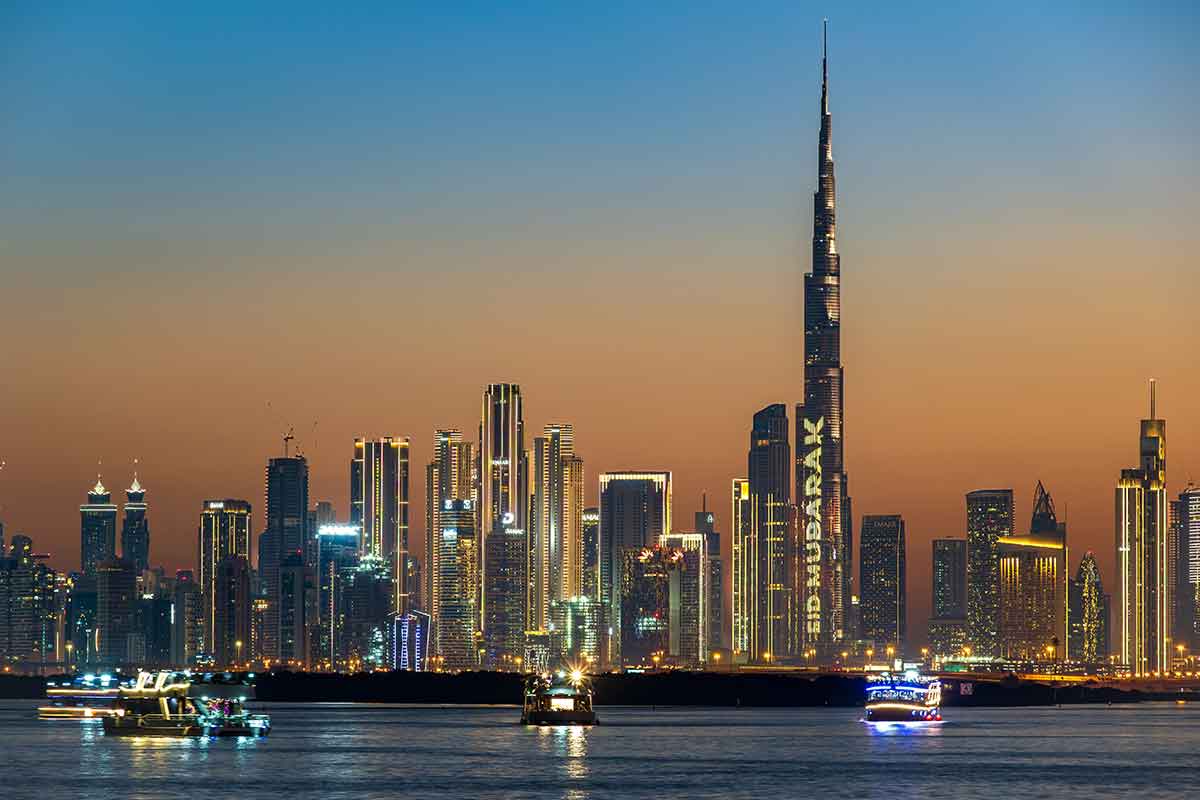
According to experts cash transactions in Dubai are typically simpler and faster to execute as they eliminate the need for financing approvals and related procedural requirements
The year of 2025 signalled a shifting trend of cash payments for investors buying real estate in Dubai, this has been driven by several factors including continued interest from high-net-worth investors who prefer to use capital over mortgage to benefit from competitive pricing, priority access to units and flexible terms.
“Firstly, it’s important to clarify that, in Dubai, “cash buyers” does not mean unregulated physical cash transactions. It refers to buyers purchasing with their own capital – no mortgage finance or bank leverage,” Donna Lee-Elliott, Chief of Sales, OCTA Properties clarified in an exclusive interview with Arabian Business.
“Dubai continues to attract high-net-worth individuals and investors who prefer to use their own capital, motivated by tax efficiency and the city’s role as a stable wealth hub,” she explained.
According to Henley and Partners Private Wealth Migration Report 2025, it is predicted that 165,000 millionaires will relocate in 2026.
According to Vinod Nambiar, CFO, Meraki Group, “Dubai has witnessed sustained population growth, accompanied by an increasing relocation of high-net-worth individuals to the city. This trend has been driven by a combination of factors, including economic opportunity, a favourable tax environment, quality of life, long-term residency programmes, and a strong perception of safety.”
Recent market data reveals that cash transactions now account for over 54 per cent of all deals in the second half of 2025. Real estate experts note that cash transactions are typically simpler and faster to execute as they eliminate the need for financing approvals and related procedural requirements. Cash buyers also tend to benefit from more competitive pricing and priority access to unit selection.
Industry executives view the prevalence of cash transactions as a sign of market confidence rather than a defensive reaction to global macroeconomic conditions.
“I believe it’s both, but confidence is doing more of the heavy lifting in Dubai than fear,” Lee-Elliott said. “A large portion of demand comes from high-net-worth individuals, family offices and international investors, who can use leverage but choose not to. That’s usually a confidence signal.”
On Wednesday, Arabian Business reported that Dubai broke records with the highest single-day transaction in the real estate market history with 1,501 deals amounting to $4.25 billion.
The UAE property market is set on a steady path for expansion underpinned by resilient non-economic oil activity, strong population growth and sustained domestic and international investment interest.
According to new data revealed by CBRE Middle East, growth across commercial, residential, hospitality, retail and industrial sectors continues to remain robust pointing to a measured pace of growth.
“The market is being powered by real liquidity rather than debt-driven demand. In 2025, mortgage-backed transactions represented only about one-quarter of total transaction value, highlighting that buyers are relying more on cash and equity. This points to financially strong, long-term capital rather than speculative leverage,” said Ahmed Hashish, Head of Sales-HRE Development.
Experts believe that cash payments will continue to rise with the city’s real estate market. Ammar Malhi, COO of SmartCrowd, said: “Cash makes deals simpler and faster.”
“Many international buyers see variable interest rates as an unnecessary risk. For those earning in volatile currencies or with irregular income, paying cash often feels like the safer and more straightforward option,” he added.
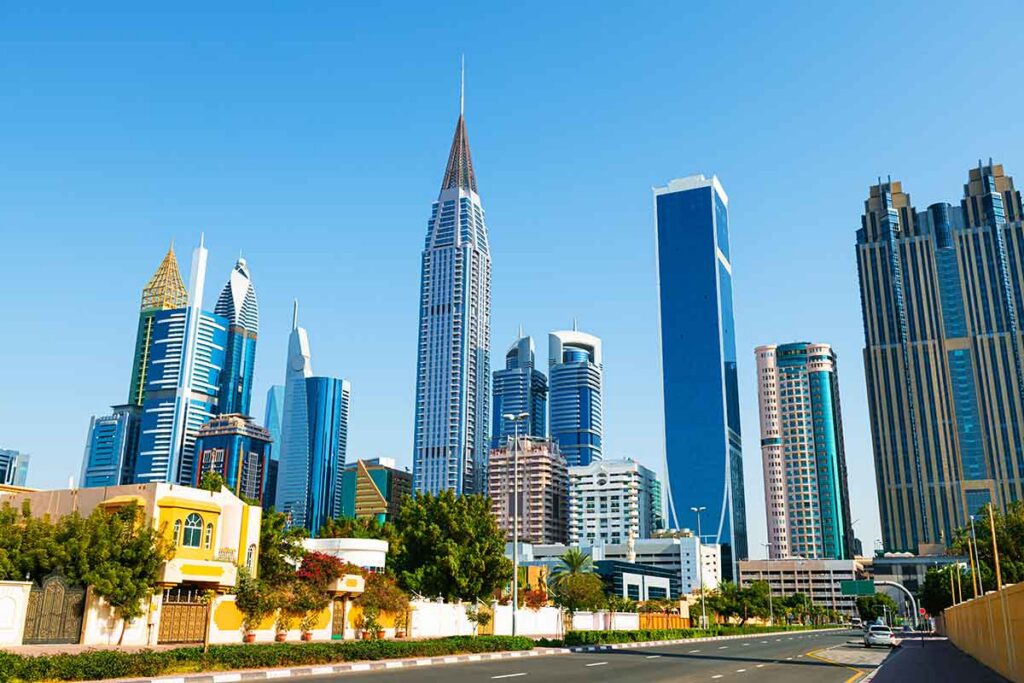 High mortgage rates have reduced the appeal of financing, according to Hashish. Cash payments give buyers “better pricing, flexible terms, and faster closings,” creating a negotiating advantage. In some prime areas such as Downtown Dubai, cash buyers accounted for up to 67 per cent of transactions in H2 2025, he said.
Escrow protections, digital transaction systems and clearer ownership rules have lowered the perceived risk of deploying large sums. That, in turn, has encouraged buyers to move without the additional layer of bank financing, which in competitive off-plan launches would only introduce delays and conditions that sellers have little incentive to accommodate.
The most frequent question the cash dominance raises is whether it signals genuine conviction in Dubai’s property market or merely reflects buyers hedging against rising global interest rates. According to industry experts, is that both forces are present, though they do not weigh equally.
Nambiar said, “Financing remains readily available; however, buyers are deliberately choosing not to utilise leverage. This behaviour underscores the quality and depth of capital entering the market, indicating participation from well-capitalised investors with long-term investment horizons rather than buyers driven by short-term financing considerations.”
Hashish believes that globally elevated mortgage rates have made financing less attractive while simultaneously validating the cash buyer’s position.
“While global interest rate uncertainty has encouraged buyers to limit leverage, the willingness to deploy large amounts of capital into real estate indicates strong confidence in Dubai’s long-term fundamentals from both residents and international clients,” he said.
Lee-Elliott frames it in behavioural terms: a cash buyer who locks capital into an asset for years is, by definition, making a long-term wager.
“Cash buyers are effectively saying, ‘I’m comfortable locking capital here for years.’ That suggests belief in price durability, rental yields, political and regulatory stability.”
The nature of the capital flowing into Dubai’s property sector matters as much as its quantity. With mortgage-backed deals representing approximately 25 per cent of transaction value, the market is driven by real liquidity rather than debt-fuelled demand.
Malhi describes the capital pool as heterogeneous which is a mix that behaves differently across asset classes and market cycles.
“Dubai is seeing a broad mix of capital, not a single speculative wave: wealth preservation capital seeking stability and long-term residency; entrepreneurial capital linked to business activity and regional expansion; yield-driven capital targeting rental income and dollar-pegged exposure; and opportunistic capital recycling equity across cycles and assets.”
Nambiar adds that the diversity of the buyer pool is itself a stabilising force, with cash transactions spanning end users, non-resident investors and income-focused buyers seeking Dubai’s rental yields, which continue to outperform comparable prime markets globally.
That heterogeneity has a pricing consequence. Rather than moving the market uniformly upward, cash-driven demand has created a tiered landscape where prime, well-located assets attract disproportionate attention while mid-market units see more measured appreciation.
Prime waterfront developments, luxury tower launches and branded residences are overwhelmingly the domain of ultra-high-net-worth individuals and family offices. In Downtown Dubai, that cohort accounted for 67 per cent of H2 2025 transactions. Yet the phenomenon extends well beyond trophy assets.
Malhi said, “Dubai may not yet match London or New York in terms of public REIT depth, but private institutional capital is firmly embedded. Institutions are visible in value, but limited in count.”
The non-resident buyer is also a consistent thread across the data. Nambiar noted that the distinction between cash and financed transactions maps closely onto residency status: non-residents transact almost exclusively in cash given limited access to local credit facilities, while resident buyers are more likely to carry a mortgage.
Cash-focused strategies reshape developer planning
The cash-dominated market has recalibrated how developers approach both project planning and pricing.
Hashish said, “We structured pricing strategies to reward upfront and fast payments – sharper pricing for a 40 per cent downpayment and incentives for full cash payments of 100 per cent – helping improve cash flow and maintain transaction momentum in a high-volume market. We are having a very good response to this pricing strategy and we believe most developers started to use the same method of rewarding.”
Malhi identifies a broader pattern: developers are optimising for execution speed and absorption certainty rather than margin expansion.
“Developers haven’t rushed to discount headline prices. Instead, they’ve adjusted how buyers pay, not how much they pay. Longer payment plans, post-handover structures and milestone-based schedules have become tools to keep prices firm while still supporting demand.”
At the product level, this orientation toward the cash buyer has pushed development toward smaller, more efficient layouts that appeal to investors and internationally mobile buyers who can move quickly. The developer that calibrates its pipeline to this reality gains a transaction velocity advantage that compounds through the launch cycle.
 For balance sheets, the benefits are equally tangible. Nambiar notes that strong cash inflows enhance developers’ financial visibility during construction and delivery phases, reducing reliance on external borrowings and providing greater flexibility, a structural advantage that became apparent during the financing disruptions of the previous rate cycle.
The near-consensus view among analysts and practitioners is that a cash-heavy market insulates Dubai from the transmission mechanism that has caused distress in mortgage-dominated markets during periods of rate tightening.
However, cash dominance does not eliminate risk, Malhi said, “A market led by cash buyers is less sensitive to local borrowing costs but more exposed to shifts in global capital flows and investor sentiment. In periods of geopolitical uncertainty or global risk-off conditions, cash buyers tend to delay deployment rather than being forced to sell.”
The practical difference is important: a slowdown driven by capital hesitancy looks different from one driven by forced deleveraging. Volume compresses; prices normalise. But the sharp corrections associated with leveraged markets where sellers must transact regardless of price are structurally less likely in Dubai’s current configuration.
Nambiar said, “Cash-driven demand does provide a degree of insulation from global interest rate volatility, as it reduces the risk of distressed or forced sales, mortgage delinquencies and sharp price corrections. However, this dynamic can introduce a different form of risk, particularly related to capital flow reversals.”
Dubai’s dollar peg adds a further dimension. The UAE dirham’s link to the US dollar means that the emirate’s property market is indirectly sensitive to USD liquidity conditions globally. When dollar liquidity tightens, capital flows to emerging and frontier destinations – of which Dubai, despite its maturation, remains one – can decelerate. The peg that provides currency stability also imports the monetary conditions set in Washington to a certain degree.
Dubai becomes a core global market
Lee-Elliott believes that Dubai has moved from opportunistic consideration to core allocation.
“Dubai has shifted from an ‘alternative’ market to a core allocation for global real estate capital because it offers a rare mix of tax efficiency, strong yields, political and economic stability and global lifestyle appeal. For a growing segment of global investors, it’s no longer ‘Should we include Dubai?’ – it’s ‘How much exposure should we have?'” he said.
Malhi characterises Dubai as one of the first markets global buyers now consider, rather than a secondary option, while cautioning that global capital remains fundamentally pragmatic.
“Global capital is practical. It goes where returns make sense, confidence is high and there’s a clear path to exit. Dubai continues to attract investment because it adjusts and improves through regulation, policy and market structure – not because of hype or momentum alone, he explained.
Nambiar projects continuity, citing Dubai’s combination of returns, tax efficiency, lifestyle advantages and investor-friendly policy as mutually reinforcing draws. Hashish added that the cash buyer not as a temporary phenomenon but as the defining feature of a market that has matured into a different risk category than the one it occupied a decade ago.
With the increase of cash-buyers in the Dubai real estate market, the question experts grapple with is – when a market is increasingly priced by cash buyers, what happens to the large population of Dubai’s long-term residents who need a mortgage to buy a home?
Malhi identifies the divergence – cash buyer dominance in prime areas has elevated prices in those segments beyond comfortable mortgage affordability, creating a segmentation in which cash buyers cluster in prime locations while financed buyers gravitate toward mid-market communities, secondary locations and smaller units. That segmentation is not inherently unstable, but it requires deliberate policy attention to ensure the market retains a functional ownership pathway for salaried residents.
Experts believe that a cash-heavy market is not a speculative one.
“What matters more than the funding method is whether demand is diversified, supply is disciplined and end users are supported alongside investors. The real test won’t be whether cash remains dominant, but whether Dubai continues to balance global capital with long-term residents and genuine homeownership. If that balance holds, cash dominance can be a source of resilience rather than risk,” Malhi said.
“Dubai has long been a preferred destination for global real estate capital, and it is expected to maintain this position due to its investor-friendly initiatives, strong market fundamentals, and strategic international appeal,” Nambiar concluded.